
7 LinkedIn Tips for Sales Professionals
Use these linkedin tips for sales professionals to improve your profile, write better posts, build relationships, send smarter messages, and track results.
Grow your LinkedIn to the next level.
Use ViralBrain to analyze top creators and create posts that perform.
Try ViralBrain freeYour LinkedIn profile is part of the pitch. Treating it like a passive online resume is a costly sales habit. Buyers use it to judge whether you understand their work before they decide whether your message deserves attention.
The useful system has several connected parts. Your profile creates credibility. Your posts show how you think. Your comments build familiarity. Your messages use context. Your review process links those actions to replies, meetings, opportunities, and pipeline movement.
LinkedIn's sales research supports that sequence. Only 4% of B2B buyers or influencers had a favorable impression of a salesperson who reached out cold, compared with 87% when someone in their professional network made the introduction, according to LinkedIn sales research reported by Digital Applied. The same source reports that 92% engage with sales professionals recognized as industry thought leaders.
So the answer isn't “post more” and hope the algorithm sends a buyer. The answer is to make each visible action useful, then measure what happens after it. These seven LinkedIn tips for sales professionals focus on that workflow, with practical steps and a healthy dislike of empty activity.
1. Profile Optimization Beats Generic Bios
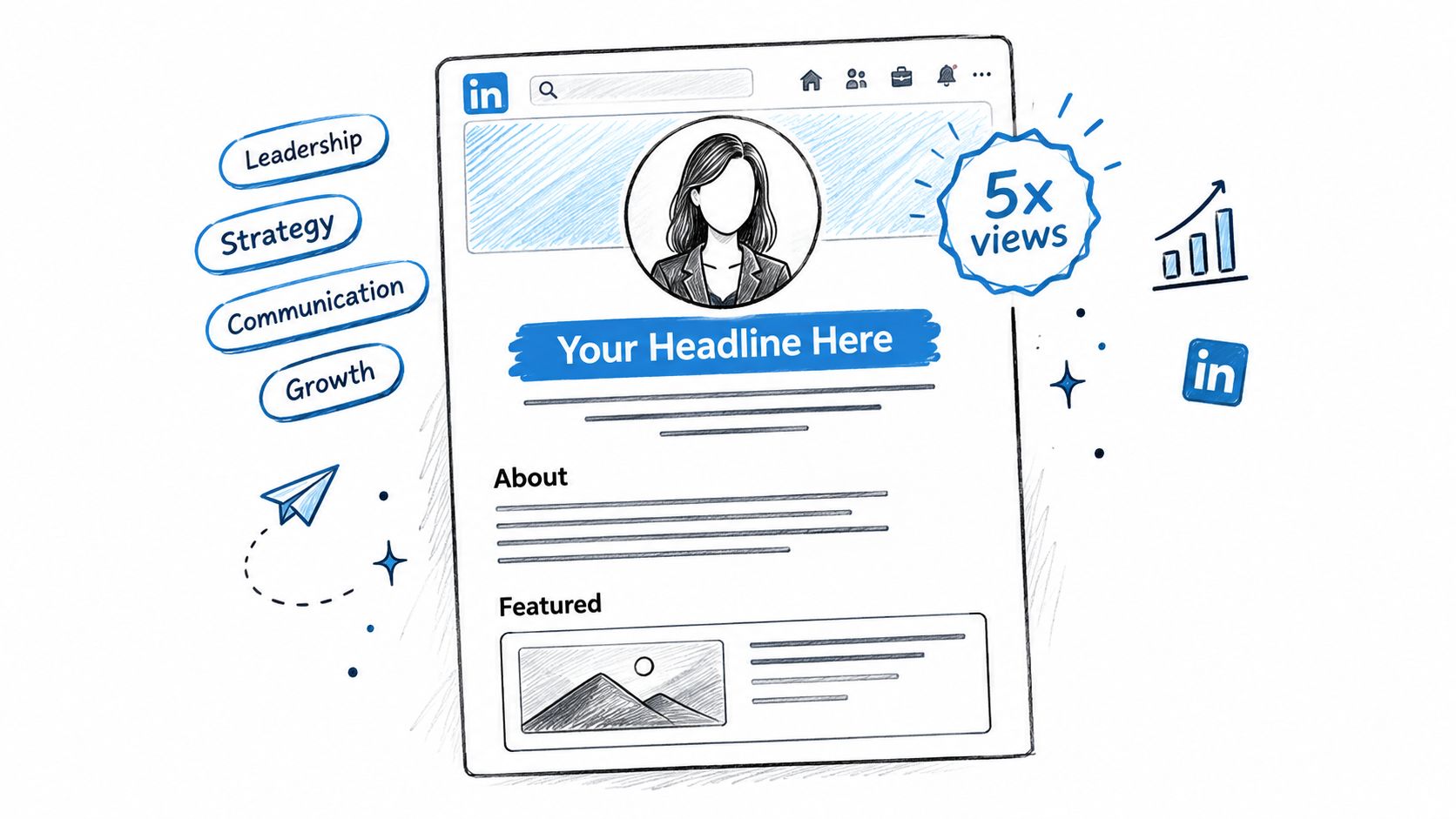
Your profile should answer three questions quickly. Who do you help, what problem do you solve, and why should a buyer trust you? A job title answers none of them.
LinkedIn's own Social Selling Index measures professional brand, finding the right people, engaging with insights, and building relationships through a four part sales benchmark. That makes profile quality part of a wider selling process, not a decorative exercise.
A headline such as “Account Executive at Company X” tells a prospect where you work. It doesn't tell them whether you understand their problem. A stronger version names the buyer, the problem, and the useful outcome, without stuffing the sentence with corporate perfume.
Your About section should follow the same rule. Explain the situations you see, the people you help, the work you do, and the next sensible step for a reader. Add evidence you can defend, such as the types of accounts you serve or the sales problems you handle. Don't borrow impressive figures from a colleague. Your profile isn't a group project.
Make the profile easy to act on
Use your strongest proof in the Featured section. Add a useful post, customer approved story, or clear explanation of your method. Then check whether the page gives a prospect a natural way to contact you. Independent profile analysis found that 14% of LinkedIn users omitted an About section, while 84% left out contact information, according to The Job Insiders' profile analysis.
Use this guide to writing a stronger LinkedIn About section to tighten the page.
Practical rule: Write for the buyer who found you through a search, not for a recruiter scanning titles.
Review the profile with three current customers. Ask what they think you help with after reading it. If their answers differ, your positioning is doing unpaid work for your competitors.
2. Post Consistently Using Data from Winning Patterns
Consistency helps only when the content has a point. A weekly stream of vague encouragement is still vague encouragement, just better organized.
Start by studying posts that attract useful discussion in your niche. Look for the opening line, the type of problem, the proof used, and the way the writer invites a response. Don't copy the wording. Copying makes you sound like a cheaper version of someone else. Study the structure, then replace it with a real lesson from your own sales work.
A simple format works well for testing. State a specific problem, give a few practical actions, then ask for a relevant perspective. The structure gives readers a reason to continue, while the question creates a clear path into a conversation.
Build a small testing habit
Save strong examples in a document. For each one, record the hook, topic, proof, format, and closing question. After publishing your own posts, record comments, shares, profile views, connection requests, and relevant messages. Likes are easy to collect and easy to misunderstand.
LinkedIn reports that 70% of sales professionals are most active on the platform for business purposes, according to its State of Sales material. That makes the feed a working sales environment for many professionals, not merely a place to announce a promotion.
Use a data driven content strategy to turn observations into repeatable tests.
Try these operating rules:
- Record the source: Base each post on a customer question, objection, sales lesson, or buyer concern.
- Test one structure: Use the same format across several topics before judging it.
- Track conversation quality: Note whether comments come from target buyers or from people who collect motivational slogans.
- Review the next action: Check whether a post led to profile visits, relevant connections, or a sales conversation.
A post that gets attention but no useful buyer action may be good content. It may also be a very polished distraction.

3. Build Your Network Before You Need It
Cold outreach starts with a trust deficit. A buyer who does not know you has little reason to accept a generic pitch, while LinkedIn research found that 74% of buyers making large purchases expect salespeople to offer new or different insights, according to Digital Applied's report of the research. The practical response is to create useful evidence before requesting time.
Follow people at target accounts and study their public activity. Comment only when you can add a relevant example, clarify an issue, or offer a different view. “Great post” creates a notification, not familiarity. A useful comment also gives you a visible reason to connect later.
Build the target list around accounts, roles, current business issues, and recent public signals. These fields turn networking into a sales workflow. A connection note can refer to a specific post, shared professional context, or problem both parties work around. Keep the note short and make the relevance obvious.
Turn engagement into a record
Maintain an account log with the person, company, topic discussed, interaction date, and possible next step. This simple record prevents a common failure: a rep opens a profile, forgets the reason, then sends “just checking in” weeks later.
LinkedIn reports that buyers are 71% more likely to engage when a salesperson mentions information specific to their current job. Specificity shows that the message reflects the buyer's situation rather than a copied sequence.
Use the interaction as context when you eventually message. Refer to a point about hiring, reporting, process friction, or customer retention, then offer one useful observation. A compact template is: “Your point about [issue] relates to [observation]. We have seen [relevant pattern]. Is [question] affecting your team?” Leave the meeting request out of the opening line.
For more detail on automated LinkedIn outreach, keep the focus on relevance and responsible use.
Good outreach continues a useful exchange. Bad outreach behaves as if no exchange occurred.
Measure accepted connections, replies from target accounts, conversations started, meetings, opportunities, and pipeline movement. A large network without buyer relevance is a crowded address book. Reviewing these stages also shows whether engagement is creating access or merely producing activity.
4. Repurpose Existing Content Into LinkedIn Gold
Most sales teams already have material worth publishing. It sits in call notes, objection logs, proposal explanations, onboarding documents, customer emails, and internal conversations. Creating every post from a blank page is unnecessary suffering disguised as discipline.
A useful sales conversation can produce several assets. One objection can become a short post about the buyer's concern, a post about a common mistake, a comment on someone else's discussion, and a message resource for a relevant prospect. The work isn't to repeat the conversation. The work is to extract one lesson and give it a format people can use.
Start with recent material. Look for moments where a buyer changed direction, rejected an assumption, asked a sharp question, or exposed a gap in your sales process. These moments are more useful than another post about “the power of teamwork.”
Protect the customer and keep the lesson
Ask permission before sharing identifiable customer details. Remove names, confidential information, and anything that makes the account obvious unless the customer has approved the story. A sales lesson loses value when it creates a legal meeting.
Use a simple transformation:
- Source: A customer objection or question.
- Lesson: What the objection revealed.
- Evidence: The actual context you can disclose.
- Action: What another sales professional can do.
- Conversation: A question about how others handle the same issue.
Your CRM can support this process if reps capture useful learning instead of only updating stages. Create a content note for recurring objections, buyer language, and lessons from lost or won deals. Then review those notes during your weekly content session.
These content repurposing strategies can help turn existing material into drafts without sanding away the original insight.
A cloud based image resizer can help prepare visual assets when a post needs one. The image should support the point, not exist because an empty content calendar demanded a rectangle.
Start with one customer lesson this week. Publish the useful part, not the sales pitch.
The same source material can support a short video or another format when the lesson needs more explanation.
5. Use Hooks That Actually Work, Not Clickbait
A hook should qualify attention, not manufacture it. The opening line tells a potential buyer whether the post addresses a problem they recognize. “Your sales process has a qualification problem” identifies a subject. “Nobody is talking about this” supplies suspense without evidence.
Start with a situation from your sales workflow. A buyer requesting a product demo before explaining the business problem creates a useful observation. “This one trick changed everything” creates only an unsupported promise. Specificity helps the right prospects continue and gives you a clear outcome to measure.
Write the body before the opening. Salespeople who draft the hook first often reshape the argument to protect the headline. That produces a post optimized for the first impression rather than for useful analysis. Once the explanation is complete, choose the sentence that states its strongest honest tension.
These formats can produce a workable first line:
- Specific problem: “Your champion may support the project and still fail to move it internally.”
- Unexpected contrast: “The prospect wasn't resisting price. They were resisting the work required after purchase.”
- Clear lesson: “A detailed demo can hide a weak discovery call.”
- Process observation: “Three people asked for the proposal. None owned the decision.”
Use evidence you can explain. A number without a reliable source may attract attention, but it gives a buyer an easy reason to doubt the rest of the post. If you lack a defensible statistic, describe the situation precisely and identify what it changed in your process.
The opening and the body must make the same promise. A hook about qualification followed by general advice on posting consistency is a broken sales message in miniature. Buyers already assess whether a vendor's claims match its delivery. LinkedIn posts receive the same scrutiny.
A strong hook narrows the audience. That is useful. Relevant readers stop, while people outside the problem continue scrolling.
Run a small test with two openings for similar topics. Record reach, comments, profile visits, relevant connection requests, and conversations in a simple sheet. Compare the quality of responses, not only their volume. A smaller group of potential buyers can produce better sales evidence than a larger audience of content professionals. The hook is the first stage of the workflow, so judge it by the conversations it helps create.
6. Ask Real Questions, Don't Ask for Anything Yet
A LinkedIn post can generate attention and still produce no useful sales evidence. The closing line often explains why. Repeating “Book a demo” turns a lesson into a disguised form, especially when the post has not established a relevant problem.
Ask for perspective before asking for time. A specific question lets buyers describe their situation in public. Their wording can reveal objections, priorities, process gaps, and account relevance more clearly than a generic form response.
After a post about sales handoffs, ask: “Where does information usually get lost between qualification and discovery?” The question points to a defined operating problem and gives the right readers a reason to respond. It also avoids assuming that every commenter wants a call.
Treat comments as sales research
Comments are evidence only when you examine their substance. Add an example, clarify a point, or ask a follow-up that matches what the person wrote. A useful reply should stand on its own. Turning every response into a private-message invitation makes the sales intent obvious and weakens the exchange.
LinkedIn reports that buyers engage with sales professionals recognized as industry thought leaders, according to its sales research summary. The practical sequence is clear: demonstrate judgment in public, then use private outreach when the discussion creates a relevant opening.
Record the question, commenters, roles, and resulting conversations in a simple sheet. Classify the evidence:
- Attention signals: Reactions, comments, shares, and profile views.
- Relationship signals: Relevant connections, replies, repeat engagement, and direct questions.
- Sales signals: Qualified conversations, meetings, opportunities, stage movement, and pipeline value.
The purpose is not to avoid calls to action. It is to place them after the buyer has supplied useful context. Someone who explains a current problem has given you a stronger basis for outreach than someone who clicked a generic “learn more” link.
Ask a question a real customer could answer. Then read the responses as sales information, not applause. Track which answers lead to relevant replies or conversations, and adjust the next question accordingly.
7. Analyze Your Own Data, Don't Copy What Works Elsewhere
A post that performs well for an artificial intelligence founder may fail for a sales professional serving manufacturers. Buyers use different language, assess different risks, and respond to different evidence. Treat LinkedIn as a controlled sales workflow, not a gallery of borrowed tactics.
Create a lean testing record for every post. Capture the topic, opening, format, evidence, question, comments, shares, profile activity, replies, meetings, and opportunities. A spreadsheet is enough if it connects visible engagement with later sales activity. Memory is not a reliable reporting system.
LinkedIn reports that high Social Selling Index sellers generate 45% more opportunities per quarter and are 51% more likely to hit quota than lower-SSI peers, according to LinkedIn's published sales research. The practical point is to connect professional positioning, targeted people, useful engagement, and relationship building to sales outcomes. A score is a diagnostic, not a trophy.
Run smaller tests
Change one variable at a time. Keep the topic similar while testing a new hook. Then compare questions, customer lessons, and process explanations. If the topic, format, evidence, and call to action all change together, the result cannot identify what worked.
Review posts in batches and rank them by buyer relevance, not visible activity alone. Examine five factors:
- Topic: Which buyer problem appears repeatedly?
- Proof: Did the post use a customer observation, process detail, or personal mistake?
- Format: Did the structure make the lesson easy to follow?
- Response: Did comments contain specific problems or generic praise?
- Outcome: Did a relevant conversation move toward a sales stage?
LinkedIn's sales performance tracking guidance recommends monitoring stage movement, conversion rates, buyer intent, and pipeline advancement rather than activity counts. High activity can still produce no qualified conversation.
Repeat patterns that attract the right buyers and lead to useful discussions. Do not copy another creator's personality, schedule, or favorite hook. Borrowing a testable pattern is sensible. Borrowing its conclusion without checking your own account is lazy.
7-Point Comparison of LinkedIn Tips for Sales Pros
| Item | Implementation complexity | Resource requirements | Expected outcomes | Ideal use cases | Key advantages | Main drawbacks |
|---|---|---|---|---|---|---|
| Profile Optimization Beats Generic Bios | Moderate, audit and rewrite profile sections | Time for writing & photos, keyword research, possible professional photo | Higher profile views (up to 5x), more inbound and credibility | Salespeople starting outreach or with low visibility | Improves search visibility, builds credibility, differentiates you | Takes time to create; weeks for search impact; requires honest assessment |
| Post Consistently Using Data from Winning Patterns | Moderate–High, study patterns and maintain cadence | Time to research high-engagement posts, content calendar, monitoring | Faster engagement growth; 3x profile views when posting weekly | Creators aiming to scale engagement and audience momentum | Removes guesswork, compound growth, repeatable structures | Initial time investment; 4–6 weeks to see lift; patterns shift over time |
| Build Your Network Before You Need It | Moderate, ongoing genuine engagement | Daily time for commenting, list of targets, relationship tracking | Higher connection acceptance (~40%), warmer outreach responses | Account-based sellers, enterprise reps with long cycles | Easier inbound, warm introductions, lower outreach rejection | Slow ROI (8–12 weeks); risk of surface-level engagement; consistent effort needed |
| Repurpose Existing Content Into LinkedIn Gold | Low–Moderate, audit and reformat existing material | Inventory of past content (emails, case studies), editing skill, permissions | More frequent posting (≈2x), content rooted in real experience | Busy sellers with existing customer material or CRM notes | Solves consistency, saves time, yields authentic, high-performing posts | Requires audit and formatting skill; must manage customer privacy |
| Use Hooks That Actually Work, Not Clickbait | Low, craft and test specific hooks | Audience insight, data-backed examples, A/B testing | Higher click/engagement rates (≈2.5x for specific hooks) | Anyone needing better organic stop-rate on posts | Credible attention, transferable across niches, easy to iterate | Needs audience knowledge; specific hooks take more effort than generic ones |
| Ask Real Questions, Don't Ask for Anything Yet | Low, change CTA approach and follow up | Discipline to avoid pitching, time to engage in comments | Much higher comment rates (40–60%), longer feed lifespan | Posts intended to spark discussion and surface qualified prospects | Drives conversation, builds relationships, increases organic reach | Indirect sales outcomes; slower to convert; must resist pitching in comments |
| Analyze Your Own Data, Don't Copy What Works Elsewhere | High, systematic tracking and testing | Consistent posting, spreadsheet or analytics tool, time (8–12 weeks) | Tailored strategy, higher engagement by audience, clearer patterns | Users committed to optimization and long-term content strategy | Audience-specific optimization, competitive advantage, confident decisions | Requires many posts and time to reveal patterns; ongoing monitoring needed |
Turn the Seven Tips Into a Sales Routine
These tips work better as a weekly routine than as a burst of enthusiasm after a sales training session. Start by auditing your profile. Check the headline, About section, Featured content, proof, contact path, and buyer language. If the page still reads like an internal HR record, fix that before publishing another post about trust.
Choose one proven post structure from your own records. Use a customer problem, a sales lesson, or a useful objection. Keep the claim narrow. Add evidence you can defend. End with a question that invites perspective rather than a demo request disguised as a question.
Repurpose one sales lesson from the week. Review call notes, objection records, lost deal explanations, and customer emails. Remove confidential details. Turn one useful moment into a post, then save related material for future formats. Your CRM is not only a forecasting tool. It can become a source of buyer language if your team records more than stage changes.
Spend time with target accounts before messaging them. Read their posts. Add a relevant comment. Note the issue they raised. When you send a message, refer to that context and offer something useful. LinkedIn reports that sales professionals save 65 hours annually through Sales Navigator's AI powered platform, according to LinkedIn's Sales Navigator materials. Time saved only matters when the saved time goes into better research, not faster generic outreach.
Review the numbers at the end of the week. Separate reactions and reach from relevant replies, accepted connections, meetings, opportunities, stage movement, and pipeline value. Record what you changed so you can tell whether the result came from the hook, topic, audience, timing, or chance.
ViralBrain can support pattern research, drafting, repurposing, profile review, and analytics. Use it to reduce the blank page problem, then edit every draft until it contains your actual judgment. The tool can speed up the workflow. It can't supply customer knowledge you never captured.
Start this week with one profile change, one useful post, one target account interaction, and one recorded sales outcome. That is a small routine. It is still more serious than posting noise and calling it social selling.
ViralBrain analyzes high performing LinkedIn patterns, helps you study hooks and structures, drafts posts in your voice, repurposes existing material, and provides profile and analytics tools. Visit ViralBrain to support a more measurable LinkedIn workflow for sales.
Grow your LinkedIn to the next level.
Use ViralBrain to analyze top creators and create posts that perform.
Try ViralBrain free