
8 LinkedIn Bio Examples That Actually Work
Study 8 LinkedIn bio examples for founders, marketers, sales professionals, and freelancers, with templates, analysis, and practical tips.
Grow your LinkedIn to the next level.
Use ViralBrain to analyze top creators and create posts that perform.
Try ViralBrain freeA good LinkedIn bio says more than your job title. It helps the right person identify what you do, who you help, and why your work matters before they lose interest and return to scrolling. “Marketing professional” answers almost nothing. It's a label, not a reason to talk.
The popular advice is simple, polished, and often useless. Add personality. Be authentic. Tell your story. Fine, but a reader still needs a clear reason to care. LinkedIn began as a professional identity directory, then moved toward public profiles that could be discovered beyond a person's immediate network. A bio now has to work in search results, profile previews, connection decisions, referrals, and direct conversations. LinkedIn's early history explains why vague self description performs poorly in a searchable professional profile.
This guide compares eight LinkedIn bio structures by the job each must perform. You'll get a fill in template, a proof standard, a risk check, and a simple test for improving relevance. The examples suit founders, marketers, sales professionals, freelancers, and specialists. The focus is practical application, not polished filler, with short analysis, visual breaks, and data led testing. For more general guidance, Interview Pilot's LinkedIn summary tips offer useful background.
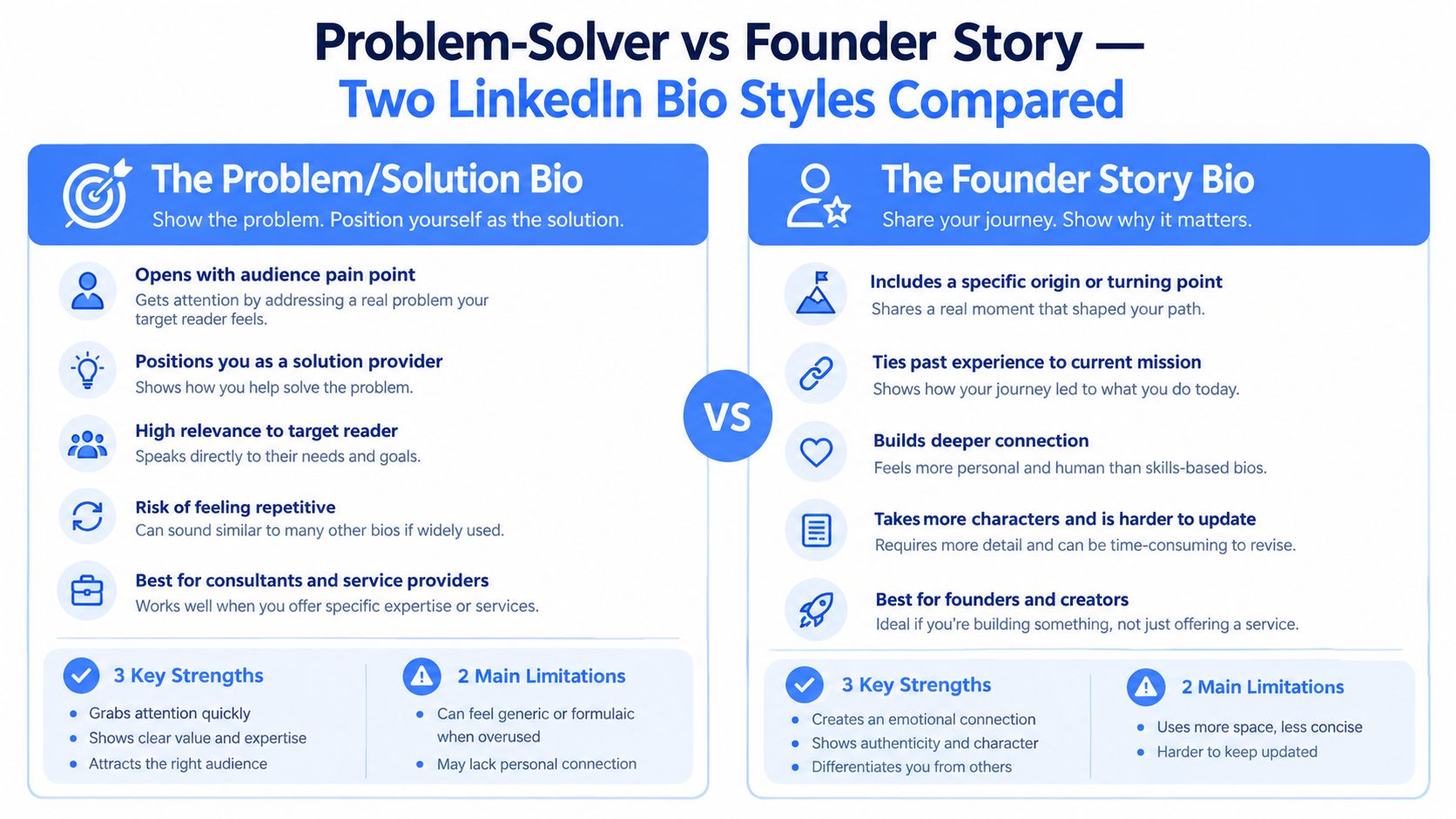
1. The Problem Solution Bio
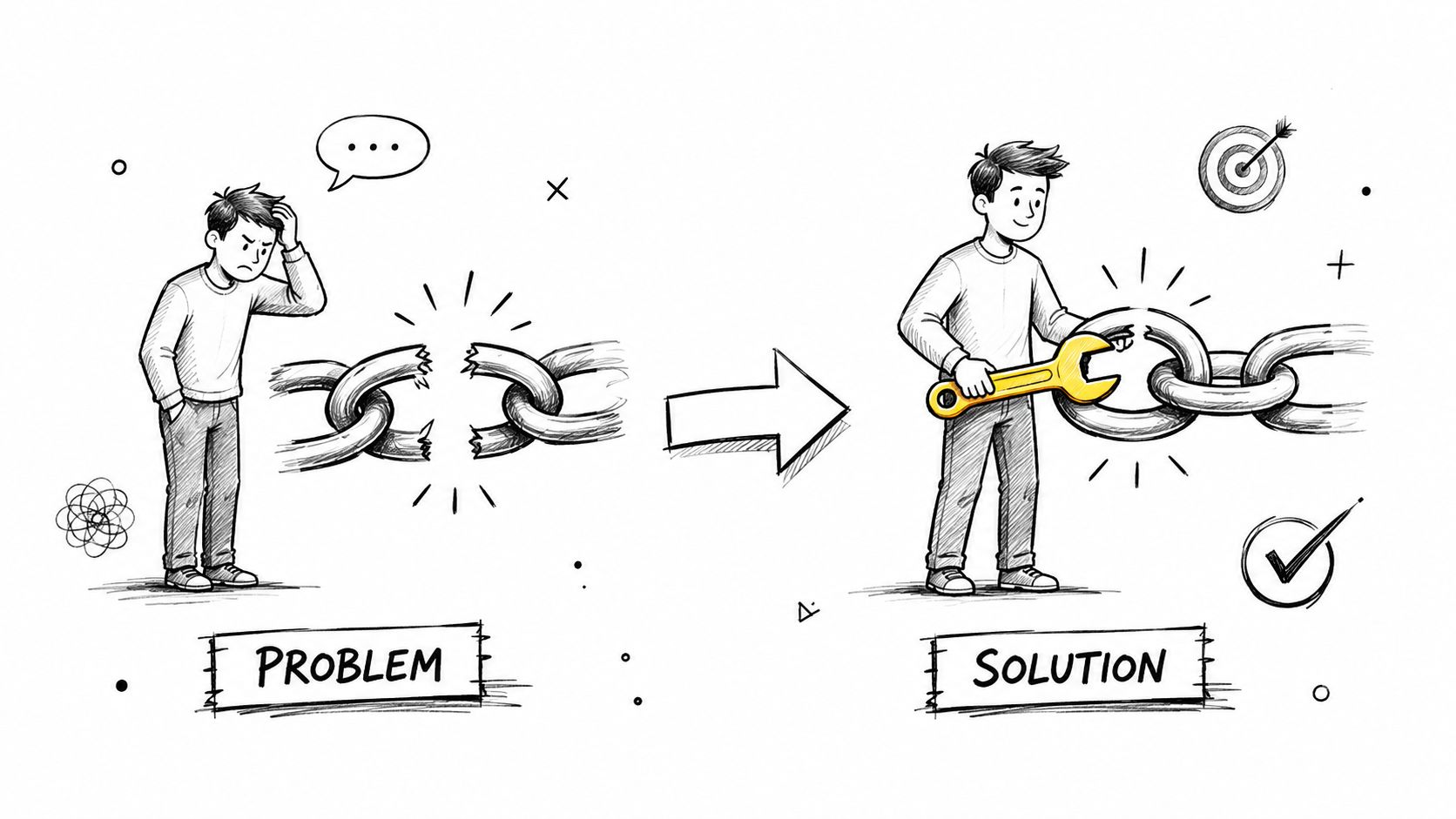
A problem solution bio earns attention by naming a problem your audience already understands. It doesn't begin with your title. It begins with the friction that makes the reader look for help.
A founder may write, “Sales teams lose good deals when buyers can't see the value. I help founders fix the message before the next pitch.” A content consultant could write, “Marketing teams drown in requests that never support pipeline. I build LinkedIn content systems that give their ideas a sharper job.”
The reader can decide quickly whether the subject applies to them. That makes this structure useful for consultants, freelancers, sales professionals, and founders with a narrow buyer group. The problem must be concrete. “Businesses need better communication” is fog. “Your sales team explains features while buyers are still trying to understand the problem” gives the reader something to recognize.
Name the problem your best reader complains about in private, not the broad topic your industry uses in public.
Fill in the structure
[Audience] struggle with [specific problem]. I help them [practical change] by [capability or method].
Your proof should connect directly to that problem. Use a real scope statement, client type, process, or outcome you can defend. If you can't disclose client details, describe the type of work, decision, or system you handled. A claim such as “I fix messaging” needs evidence somewhere in the profile, perhaps through relevant experience, work samples, or a clear description of the process.
The main risk is choosing a problem that's too broad. Review comments, posts, sales calls, and support questions from your audience. Look for the wording people use. Then test one problem at a time. LinkedIn separates appearances from views. An appearance means your name and headline were shown, while a view means someone opened the profile, according to LinkedIn's explanation of profile appearances and views. If appearances remain steady but views improve after the rewrite, the problem statement may be doing useful work.
For a related explanation of the structure, see this problem solution format guide.
2. The Specific Role With Numbers Bio
This format leads with the role, then adds a real number that shows the work has scope. It fits people whose audience wants fast confirmation of function and scale. A vague claim about being successful makes the reader do the judging. A relevant metric gives them something concrete to assess.
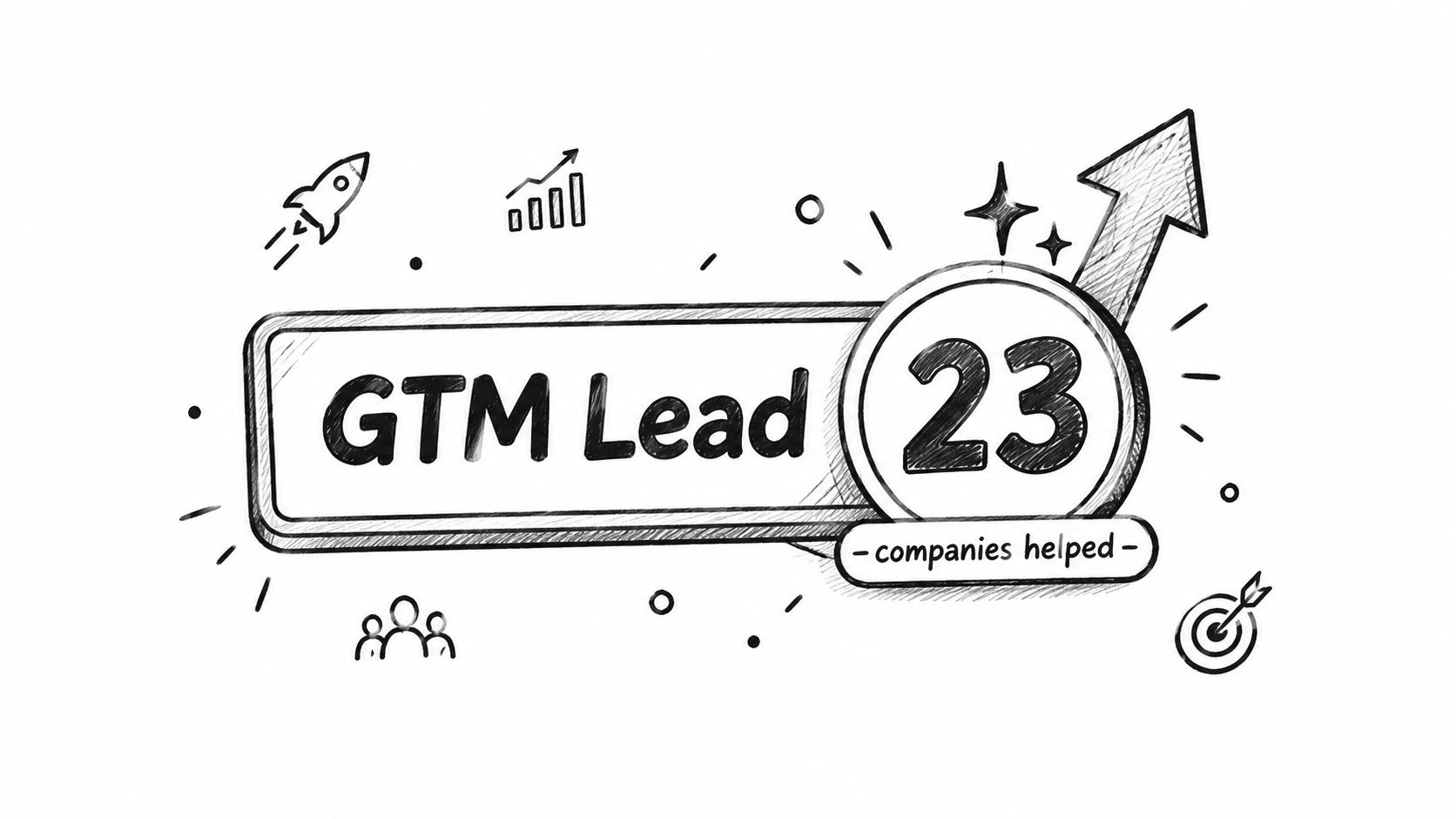
A go to market lead might write, “GTM lead for SaaS teams. Helped [number] companies move from early traction to a repeatable sales process.” A content strategist could write, “Content strategist for B2B technology firms. Influenced [real pipeline amount] through search content and LinkedIn distribution.”
Use a number only when it tells the reader something useful. Companies helped, pipeline influenced, customers served, markets entered, systems built, or time saved can all work. The figure does not need to impress everyone. It needs to matter to the people you want to attract.
Before editing, review this LinkedIn profile header guide to see how the headline and About section work together. LinkedIn's published field guidance sets a 120 character maximum for the headline and a 2,000 character maximum for the About section, as described in this LinkedIn character limit reference. Those limits punish repeated job titles and empty adjectives.
Fill in the structure
[Role] for [industry or audience]. I've [real action] for [real number or scope], with [relevant result]. Now I help [audience] [specific outcome].
The proof standard is strict. Define the metric. Say whether it represents revenue influenced, customers served, projects completed, team size, or another relevant measure. Don't turn an internal estimate into a precise public claim. Don't use a large number just because it looks good. A number without context is decorative accounting.
The risk is stale or inflated evidence. Review the figure when your role, scope, or offer changes. A profile field has limited room, so the number has to earn its place. If it does not clarify the work, cut it.
Test the bio by comparing profile views and qualified messages before and after the edit. Keep network growth separate from copy performance. A number can support credibility, but it cannot decide whether the right person cares.
3. The Before After Transformation Bio
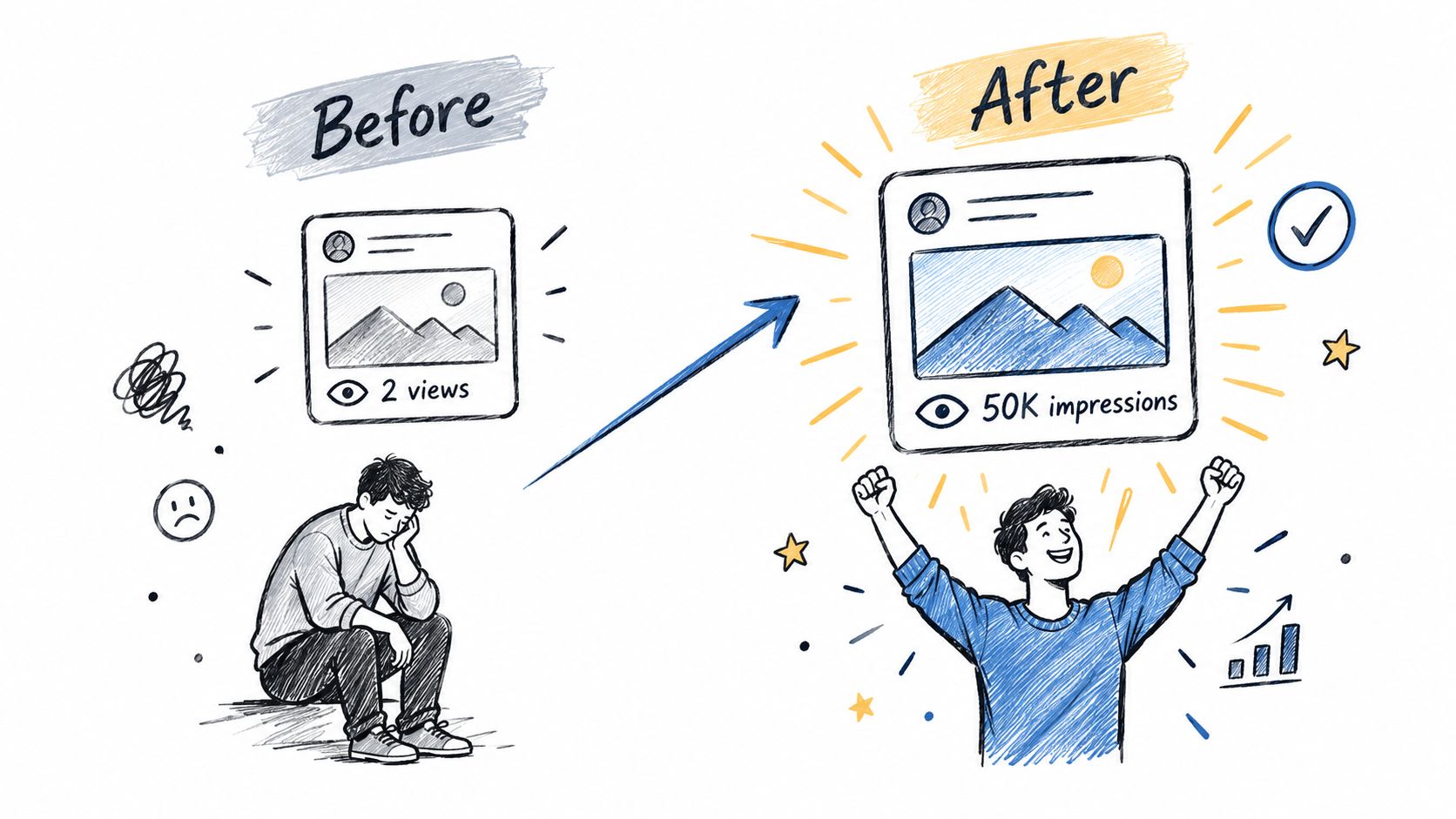
A transformation bio shows a change from one state to another. It works well for service providers because buyers usually care less about the activity than the condition that follows it.
A marketing consultant could write, “Teams come to me with scattered content and no clear path to demand. I help them build a focused publishing system tied to their commercial priorities.” A freelance operations adviser might write, “Founders start with work trapped in their heads. They leave with documented processes their teams can run.”
The structure can describe a personal change, a client change, or a business change. It must stay honest about the starting point and the destination. Don't describe the worst possible situation if your recent clients began somewhere more ordinary. Credibility disappears when the contrast sounds staged.
Fill in the structure
Before working with me, [audience] often face [specific starting condition]. I help them reach [specific after condition] through [service, skill, or approach].
The proof standard is a clear comparison. State what changed, for whom, and through what work. A case study, client permission, work sample, or documented result can support the claim. If you can't publish a client quote, include a verifiable scope statement in the bio or Experience section. “Improved growth” is not proof. “Built the reporting process used by the sales team” is more useful, even without a dramatic figure.
A transformation claim needs two honest points, the starting condition and the resulting condition. Remove either one and you have a slogan.
The risk is promising a universal outcome. Services depend on context, timing, budget, decisions, and implementation. Use language that describes the work you perform rather than guaranteeing a result for every buyer.
Test the structure against a direct version of the same bio. Track profile views plus qualified inbound conversations, not likes. LinkedIn's analytics can be limited unless an account has at least three unique profile viewers within the past seven days, according to LinkedIn's analytics guidance. A quiet first day is weak evidence. Let the profile collect relevant traffic before judging the rewrite.
4. The What I Actually Do Bio
A clear LinkedIn bio can outperform a clever one because its first job is recognition. It states the function, the audience, and the result you work toward. Plain terminology helps readers who encounter the profile through search, referrals, or a shared link without any context.
A B2B consultant might write, “I help SaaS companies build sales processes that their teams can follow. I work with founders and sales leaders on pipeline, qualification, and handoffs.” A freelance content strategist could write, “I create LinkedIn and search content for fintech startups that need a clearer route from expertise to inbound demand.”
The job is relevance, not memorability in isolation. Someone searching for a content strategist should not have to translate “growth storyteller” first. Use the terms your audience would type, repeat, or recognize in a referral.
Fill in the structure
I help [specific audience] [perform a clear function or solve a defined problem]. I focus on [specialization], especially [relevant result or context].
The proof standard is fit. Name the systems, audience, market, or work type you understand. One role paired with one useful specialization usually gives a reader more evidence than a catalogue of services. Add a scope detail where possible, such as the team, channel, or stage of business involved.
Test the structure against a more narrative version. Compare profile views with relevant conversations, not likes. A strong result is not more attention. It is more attention from people who match the audience named in the bio.
The risk is sounding cold or interchangeable. Add one short line showing how you work, such as a preference for simple processes, direct reporting, or practical decisions. Personality should clarify the working relationship. “I love coffee” tells a buyer little beyond your access to a mug.
A 2025 peer-reviewed study of 460 job seeker profiles found that sparse work history was linked to lower hireability ratings. Interviews with 32 participants found that recruiters read incomplete profiles as ambiguous. The study also reported that 31.3% of 470 interview passages discussing LinkedIn content mentioned incompleteness, as described in the published study. Clear wording should leave enough detail to show that you understand the work.
For practical guidance, compare your draft with this LinkedIn About section guide and the checklist from StoryCV.
5. The Founder Story Bio
A founder story earns attention through a specific reason for doing the work. It connects one experience to the current offer, then gives a stranger enough role and industry language to understand the profile quickly. A personal story can build connection, but connection without a recognizable business purpose becomes autobiography with a call to action attached.
A founder might write, “I built my first product and watched it fail because nobody knew it existed. Now I help early teams solve distribution before they spend more time adding features.” Another could write, “I spent years watching strong ideas lose attention because their message was unclear. I now help smaller teams explain their value to the people who need it.”
The story earns space only when it clarifies the work available today. A childhood interest, a list of former employers, or a long career history may be true, yet truth alone does not make a bio relevant. LinkedIn's documented history shows the platform's broad reach, but reach does not replace clear positioning. A founder still needs to say who they help and what changes as a result.
Fill in the structure
I discovered [specific problem] when [specific experience]. That led me to [current work], where I help [audience] [practical outcome].
The proof standard is a real moment, decision, or observation, supported by a relevant Experience entry, product detail, customer result, or public work sample. Keep the origin to a sentence or two, then move to the current offer. The reader should understand the service, audience, and point of view without needing a second profile visit.
The risk is a polished origin story with no evidence behind it. Avoid turning failure into theatre or implying that one early experience explains every later result. Show what the story changed in your decisions, methods, or market focus. Heroic lighting remains optional.
Place the founder story after a clear headline. Use the headline for role and industry terms, then let the About section explain the reason behind the work. The two parts perform different jobs.
Test two versions with the same role and audience language. Change only the opening story. Track profile views, connection acceptance, and messages from the people you want to meet. If views increase but qualified conversations do not, the story is attracting attention while the offer remains unclear. Revise the outcome before adding more backstory.
6. The Niche Specialist Bio
A niche specialist bio narrows the field. It tells a defined group that your experience matches their situation. This is useful for consultants, agencies, freelancers, and operators with deep knowledge of a market, company stage, business model, or technical problem.
A specialist might write, “I help B2B SaaS companies improve sales efficiency through clearer qualification, forecasting, and handoffs.” An ecommerce consultant could write, “I build content systems for independent online retailers that need profitable acquisition without relying on constant promotions.”
The niche should describe real expertise, not a temporary preference. “I work with startups” is still broad. Company stage, business model, customer type, team shape, or technical environment can make the fit clearer.
Fill in the structure
I help [specific company or audience type] with [specific problem] through [specialist capability]. My work focuses on [stage, market, system, or constraint].
The proof standard is repeated relevance. Show experience with the niche in your profile, portfolio, recommendations, or posts. If you're narrowing into a new area, say what you've done rather than implying a long record you don't have. Interest is not expertise. A weekend reading list is not a practice.
The risk is choosing a niche that excludes good work or has no connection to your evidence. Review the kinds of projects, customers, and problems you've handled. Keep the niche flexible enough to describe your present direction, but specific enough to guide a referral.
Use the bio as a relevance filter. LinkedIn's public profile model rewards clear professional identity, and its early introduction of public profiles helped people become discoverable beyond their immediate network, as documented in LinkedIn's platform history. The right keywords help discovery, but unsupported niche claims create the wrong kind of attention.
Test the niche against a broader version. Compare profile views with qualified inbound. Keep the niche if it reduces irrelevant traffic while improving the quality of conversations. That's a better result than collecting visits from people who only wanted to admire your use of the word “strategic.”
7. The Multi Skill Translator Bio
Some professionals combine different skills. The problem is that a list of skills doesn't explain why the combination matters. This structure translates breadth into a useful connection.
A sales adviser might write, “I combine sales strategy, buyer psychology, and copywriting to help founders make complex offers easier to buy.” A product and content specialist could write, “I connect product positioning with founder led content because buyers need the same clear explanation in both places.”
The link between the skills is the whole point. Without it, the bio reads like a cupboard full of tools with no indication of what anyone should build.
Fill in the structure
I combine [skill one], [skill two], and [skill three] to help [audience] [specific outcome]. These skills work together because [plain explanation].
The proof standard is integration. Show a project where the skills supported one decision or result. Explain what you did, not just what you know. “Strategy, writing, leadership, research” is a pile of nouns. “I use customer research to sharpen positioning, then turn it into sales and content language” describes a working method.
The risk is trying to serve every audience. Lead with the strongest or most distinctive skill. Keep the other capabilities only when they help the same reader understand your value. Breadth should increase clarity. If it creates more questions, remove something.
Test the translation against a single skill bio. Give each version the same audience and call to action. Track which produces more qualified profile views or messages. A 2025 summary reported that fully completed profiles had a 33% offer rate compared with 10% for incomplete profiles, while users with 500 or more connections had a 36% offer rate compared with 20% for users with fewer than 200 connections. Those figures cover broader profile and network factors, not the About section alone, so use them as a measurement framework rather than proof that one sentence causes an outcome. The summary of that early career LinkedIn research supports tracking profile completeness and network activity separately from bio copy.
8. The Credential Plus Personality Bio
Credentials help when a reader must assess trust before starting a conversation. A finance leader, lawyer, technical specialist, or senior operator can establish relevant context quickly. Personality then shows how that experience shapes decisions, rather than leaving the bio as a résumé with a profile photo.
A former growth leader might write, “Former growth lead at two technology companies. I help teams build processes people will actually use, especially when weak operations are limiting good strategy.” A finance adviser could write, “I spent years in corporate finance. Now I help founders make long-term decisions about money without turning every conversation into a spreadsheet funeral.”
The personality line must reveal a working belief. “I love coffee” says nothing useful about the person's judgment. “I believe dashboards should answer questions, not decorate reviews” connects personality to a practical standard. One is a beverage preference. The other gives a prospect something to evaluate.
Fill in the structure
[Credential or relevant background]. I now help [audience] [specific outcome]. I believe [work-related conviction].
Keep the format to three sentences. Use the credential to establish context, then move quickly to the work you do now. A former title signals history, not currency. Pair it with a current responsibility, result, or method rather than relying on what you did at your peak. The conviction should explain a visible choice, such as preferring simple reporting, direct feedback, careful research, or durable systems.
The proof standard is credibility plus relevance. Name the experience that gives you authority, then show how it informs present work. A prestigious background can earn attention, but it cannot prove current usefulness by itself. Your current offer needs evidence, not a museum label.
The risk is personality without substance. LinkedIn serves a broad professional audience, so the role, audience, and outcome still need clear wording, as reflected in LinkedIn's global membership context. Personality should sharpen interpretation, not make the reader decode your private mythology.
Test this structure against the direct-role version. Compare profile views, relevant connection requests, and qualified inbound. If the credential attracts attention but the personality line reduces trust, replace the opinion with a specific working principle. A human voice helps. It still needs to do a job.
8 LinkedIn Bio Styles Compared
| Bio Type | Implementation complexity | Resource requirements | Expected outcomes | Ideal use cases | Key advantages |
|---|---|---|---|---|---|
| The Problem/Solution Bio | Low (needs clear audience insight) | Moderate (audience research, A/B testing) | High relevance and faster engagement from target readers | Consultants, service providers, copywriters | Immediate relevance; concise; scalable across niches |
| The Specific Role with Numbers Bio | Low (select role and meaningful metric) | Low (tracking and periodic updates) | Strong credibility and memorable impact | Growth leads, operators, measurable-impact roles | Credibility via concrete metrics; concise |
| The Before/After Transformation Bio | Medium (craft believable contrast) | Moderate (case studies or client data) | Evokes aspiration and shows tangible outcomes | Coaches, consultants, agencies demonstrating results | Demonstrates clear transformation; builds trust |
| The What I Actually Do Bio | Very low (straightforward statement) | Low (clarity and specificity) | Attracts qualified inquiries quickly | Specialists, freelancers, established pros | Clear qualification; easy to maintain |
| The Founder Story Bio | Medium (condense origin into 1–2 sentences) | Low–Moderate (story refinement, authenticity) | Strong emotional connection and differentiation | Founders, creators, mission-driven leaders | Humanizes brand; memorable narrative |
| The Niche Specialist Bio | Medium (define and validate niche precisely) | Moderate (market validation, niche research) | Higher-quality targeted leads and premium positioning | Specialists targeting narrow market segments | Less competition; higher conversion and rates |
| The Multi-Skill Translator Bio | Medium–High (explain how skills connect) | Moderate (evidence of integrated outcomes) | Attracts cross-functional or integrated work | Multidisciplinary consultants, product leaders | Shows breadth and integration; opens multiple streams |
| The Credential Plus Personality Bio | Medium (balance credibility and tone) | Low–Moderate (choose authentic personality line) | Credible yet approachable perception | Finance, law, corporate backgrounds seeking warmth | Signals trust and relatability while retaining authority |
Pick the Structure Your Audience Can Use
Choose the structure based on the decision your reader must make.
Use problem and solution when relevance matters most. It works when your audience feels a specific pain and needs to identify the person who can address it. Use numbers when proof matters and you have a metric that can survive inspection. Use transformation when the change from one state to another is central to your service.
Choose direct wording when people need immediate clarity. It is often the best option for specialists whose work gets obscured by positioning language. Use a founder story when your origin explains the offer and gives the reader a reason to trust your point of view. Choose niche positioning when qualified fit matters more than broad reach.
Use the multi skill translator when your capabilities reinforce each other. If the skills don't connect, the format will make you look unfocused. Choose credentials with personality when the reader needs confidence in your background but still needs to hear how you think.
A complete profile supports every structure. LinkedIn's historical growth from a professional networking service into a public directory means the bio can be encountered without context. Write for a stranger who may see only your headline, About section, and recent activity. Use recognizable role, industry, capability, and audience terms. Then add proof that fits the promise.
Start with one template. Replace every bracket with a specific fact. Remove claims you can't support. Check that the opening identifies your role or problem quickly. Check that the body explains who benefits. Check that the evidence matches the claim. End with one next step that suits your aim, such as connecting, sending a message, viewing a portfolio, or discussing a role.
Track profile appearances, profile views, and qualified inbound separately. LinkedIn says appearances show how often your profile is displayed, while views show when people open it. If appearances rise while views stay flat, revise the headline. If views rise while conversations stay weak, revise the About section or the next step. Change one section at a time, then give the profile enough relevant activity to produce usable data.
Use taste for the first draft, not the final decision. A bio can sound polished and still attract the wrong people. It can sound plain and produce better conversations. ViralBrain can help inspect LinkedIn content patterns, improve a profile, and compare content signals before you publish. Its LinkedIn profile examples tool includes examples for different roles, while its profile optimizer and analytics support further review. Treat any generated wording as a draft. Your evidence, judgment, and actual voice must do the final work.
Write one version today. Remove the unsupported claim you were hoping nobody would question. Publish the clearer version, record your baseline views and inbound, then revise from evidence rather than personal taste.
ViralBrain helps founders, marketers, sales professionals, and freelancers study high performing LinkedIn patterns, improve profile wording, and create drafts matched to their voice. Use it to inspect your bio structure and content signals before publishing, then visit ViralBrain to review the available profile and content tools.
Grow your LinkedIn to the next level.
Use ViralBrain to analyze top creators and create posts that perform.
Try ViralBrain free