
What Is Unique Selling Point
What is unique selling point. What is a unique selling point? Learn the real definition, why it matters for growth, examples that work, and how
Grow your LinkedIn to the next level.
Use ViralBrain to analyze top creators and create posts that perform.
Try ViralBrain freeA unique selling point is a relevant, customer perceived advantage that's difficult to substitute, not a slogan or a feature list. Rosser Reeves' original test still holds: make a clear proposition, make it distinct, and give buyers a reason to choose it.
Most advice about USPs starts with a catchy line. That's backwards. A polished tagline can sound sharp while saying nothing a buyer cares about. The work is finding an advantage customers recognize, then proving it matters.
This guide shows how to identify that advantage, test it against customer decisions, and put it to work on LinkedIn. The standard is simple: if a competitor could make the same claim tomorrow, or buyers don't care about it today, it isn't a useful selling point.
What a Unique Selling Point Actually Is
A slogan can make a message memorable. It can't make an unimportant benefit valuable. A unique selling point, or USP, is the specific advantage that helps a customer choose you over an alternative. It has to matter to the buyer, not just sound distinctive in a meeting.
The concept emerged in the 1940s through advertising executive Rosser Reeves at Ted Bates & Company. In his 1961 book Reality in Advertising, Reeves laid out three tests: an advertisement must make a proposition, the proposition must be unique, and it must sell. That framework still cuts through weak positioning because it asks for a meaningful promise, a reason the promise stands apart, and enough persuasive force to affect a buying decision. (History of the USP and Reeves' work)
“Uses artificial intelligence” fails that test on its own. It names a method, not the advantage a customer receives. A stronger claim explains the useful result, such as turning patterns in high performing LinkedIn posts into personalized drafts that suit the writer's own voice. The technology can support the benefit, but it can't replace it.
A value proposition can explain the broader value a business provides. If you're sorting out that wider promise before narrowing it to a single selling point, this guide on how to define your value proposition can help clarify the difference.
Practical rule: Your USP is the advantage that makes the buyer's choice easier. If it doesn't change that choice, it's decoration.
The Three Pieces of a Selling Point That Works
A useful USP has to line up three things: a specific buyer, a meaningful advantage, and a credible reason that alternatives don't deliver it as well. Leave out the buyer, and your claim tries to please everyone. Leave out the advantage, and you've got a product description. Leave out the reason to choose you, and your competitor can borrow the wording without breaking a sweat.
That last problem is common in B2B. A 2009 survey of 9,000 decision makers found that 86% of vendor claimed unique benefits weren't perceived as unique or impactful enough to create preference. In the same research, needs based benefits were four times more powerful in predicting preference than general supplier proximity. Buyers care less about what a company calls special and more about how it helps them do their job better. (B2B value proposition research)
| Layer | What it says | Buyer reaction |
|---|---|---|
| Feature claim | “We use AI to create content.” | “So do other tools. What do I get?” |
| Benefit claim | “We help you write LinkedIn posts faster.” | “That sounds useful. How?” |
| Real USP | “We turn proven LinkedIn post patterns into drafts shaped around your topic and voice.” | “That's relevant. Show me how it works.” |
A USP names a customer, a benefit, and a mechanism. It still needs evidence. If you say “faster,” track how long it takes customers to move from an idea to a usable draft. If you promise better fit, ask whether the final post sounds like the person who will publish it.
Write your current claim on paper and score it against the three pieces. If you can't identify the buyer, explain the advantage in plain language, and point to a reason your offer delivers it, you don't have a USP yet. You have a draft.
How to Identify the Selling Point You Already Own
Start with evidence, not a brainstorm. Your company may already deliver an advantage customers value, but internal copy often hides it under broad words like “easy,” or “powerful.” Those words don't help anyone choose.
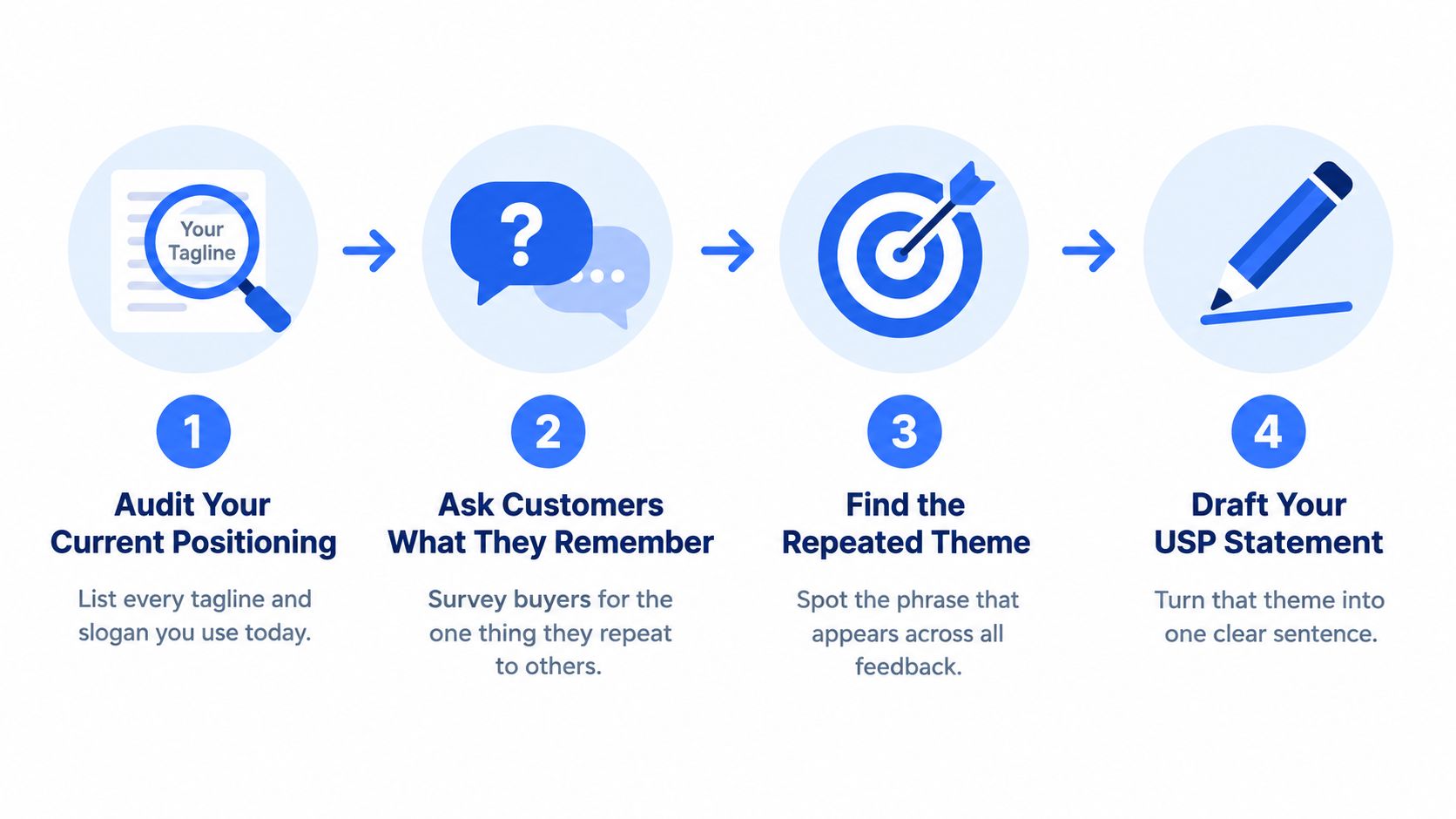
Use four evidence checks to find the strongest candidate:
- Talk to customers. Ask recent buyers what nearly stopped them from choosing you, what they value most now, and how they describe your product to a colleague. Look for clear phrases they use without being prompted.
- Compare alternatives. List what competing products promise and where customers say each falls short. Ask, “What does our approach let this buyer do that the other options don't?” A difference matters only if it solves a real problem.
- Review wins and losses. Compare sales conversations where buyers chose you with those where they went elsewhere. Ask customers which factor decided the outcome. Check whether your team's preferred explanation matches their answer.
- Test the cost of switching. Ask what a customer would miss if they chose a competitor. “Our interface is clean” is easy to replace. “We help a specialist publish useful LinkedIn posts from their own experience without starting from a blank page” gives you a sharper claim to examine.
Unusual is not automatically valuable. An unfamiliar feature can make buyers pause, while a familiar promise backed by stronger proof may be easier to trust.
Keep only one or two candidate advantages. Then check whether the audience, problem, credible advantage, and desired outcome fit together. This approach also helps keep your identity consistent across channels. For a broader look at visual and brand choices, Silva Marketing's design and local SEO guide offers useful context. And if your positioning depends on expertise, see this guide to authority positioning.
Examples That Hold Up Across Industries
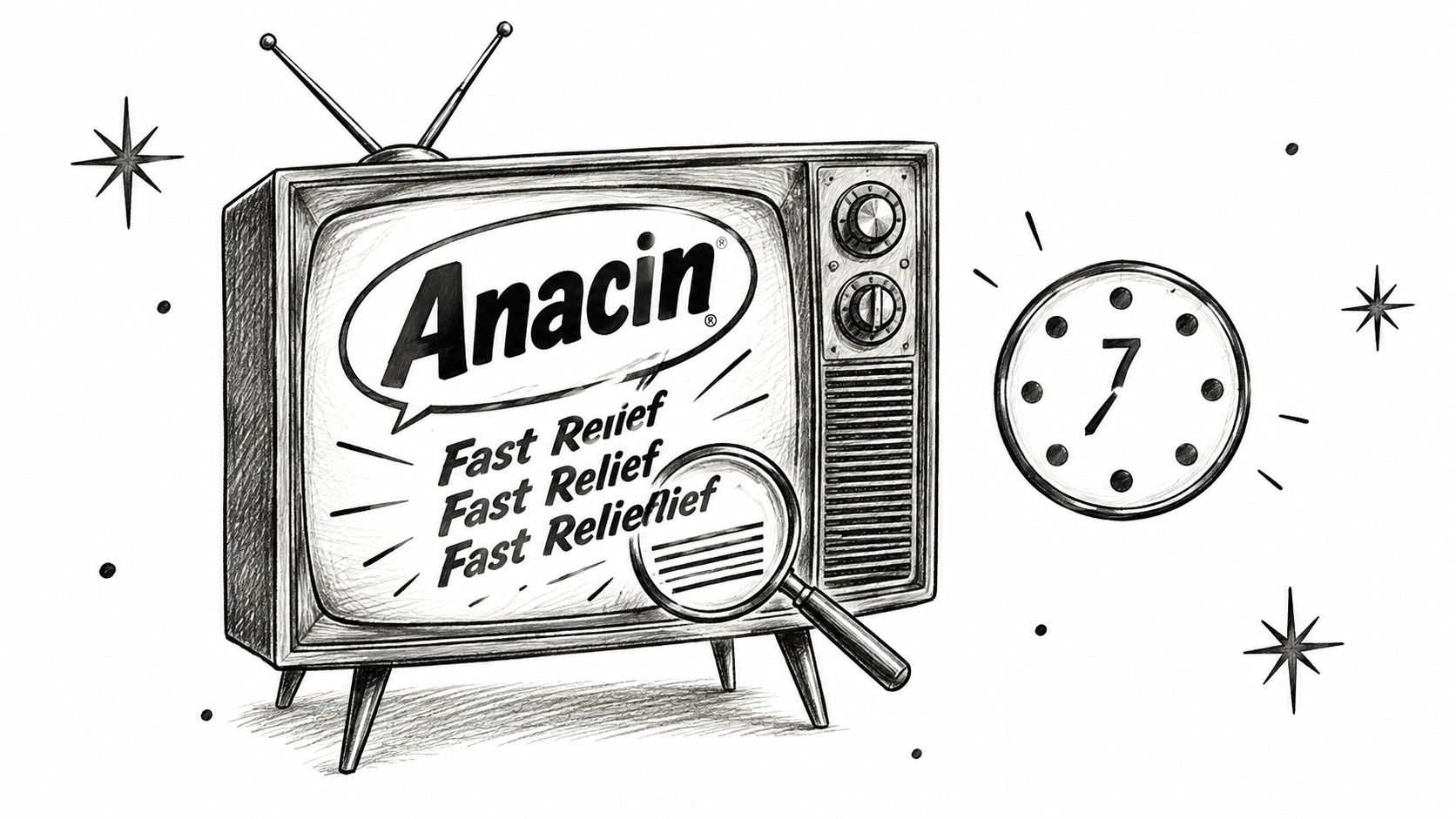
In the 1950s, Rosser Reeves built Anacin's advertising around a specific product claim tied to its formulation and fast relief. The campaign stuck to that single proposition rather than piling on a list of benefits. Historical accounts report that it ran for approximately seven years and tripled Anacin's sales. The useful lesson isn't “repeat a claim and sales will triple.” It's that one customer relevant benefit can be easier to remember than a crowded inventory of features. (History of the Anacin campaign)
The same test applies to B2B products. “AI content creation” describes a category feature. “Finds patterns in high performing LinkedIn posts and helps adapt them to your voice” describes a practical job. The second claim gives the buyer a clearer mechanism to assess, although it still needs proof that the drafts are useful and sound personal.
On LinkedIn, a format can become part of a selling point when it helps accomplish a defined task. A 2025 benchmark cited by Leadfeeder reported that document or carousel posts had an average engagement rate 278% higher than video. The same benchmark listed native video at 5.60%, image posts at 4.85%, polls at 4.40%, and text only posts at about 4.00%. These are benchmarks, not a promise for any account. The sensible takeaway is to test formats with the same topic and audience, then compare outcomes that matter to your business. (LinkedIn post format benchmarks)
A founder's selling point should work the same way. “I post about entrepreneurship” is a topic. “I share practical lessons from building a sales team for early stage software companies” gives a defined reader a clearer reason to follow. Specificity helps buyers decide whether the expertise is meant for them. It also makes the claim easier to support with firsthand examples.
How to Write the USP Statement and Test It
A good USP sentence gives the buyer a clear outcome and explains what makes that outcome credible. Use this structure as a working draft:
For [specific buyer], we help achieve [customer outcome] through [distinctive mechanism], backed by [proof you can show].
The sentence is not the proof. It's the claim that tells you what proof to gather.
B2B segments don't all want the same result. Research on B2B segmentation describes differentiation as adapting value propositions and how they're demonstrated to distinct customer groups. Keep one core strength, then frame its practical use for the buyer in front of you. (Research on B2B segmentation and differentiation)
| Buyer | Draft statement | Proof to gather |
|---|---|---|
| Founder building a personal brand | “Turn the ideas you already have into LinkedIn drafts shaped around your voice.” | Compare time from idea to usable draft. Review whether the founder would publish the result. |
| Content team | “Find repeatable post structures and adapt them to your team's topics.” | Track draft completion and whether the team uses the work in its publishing process. |
| Sales professional | “Publish practical expertise on LinkedIn without starting every post from scratch.” | Review publishing consistency, relevant replies, and conversations with potential buyers. |
Keep the proof close to the claim. A promise about speed needs a timing measure. A promise about consistency needs publishing records. A promise about audience quality needs evidence such as qualified replies, not a pile of likes.
Test the wording where buyers encounter it. Compare versions on a landing page, listen for the phrases buyers repeat in sales calls, and review wins and losses for signs that the message influenced a choice. Change one meaningful part at a time so you know what caused a difference. This guide to A/B testing can help teams structure message comparisons without turning the process into a guessing contest.
Putting the Selling Point to Work on LinkedIn
A USP shouldn't be confined to a homepage headline. It should shape what you publish, what your profile promises, and what a reader can expect from your next post. Consistency here means repeating the same core advantage through useful examples, not pasting the same sentence under every post.
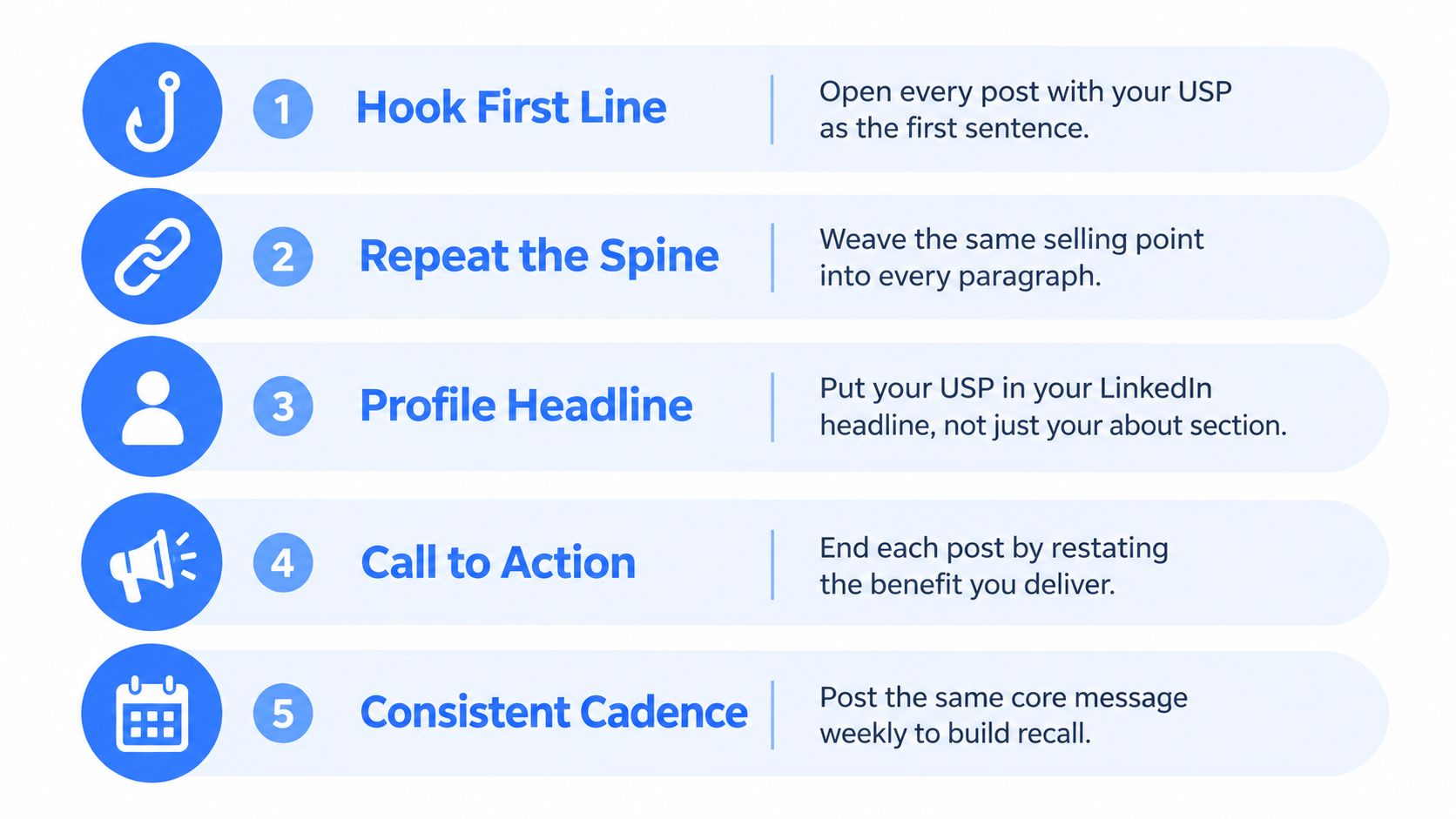
Build posts around three choices. First, use a hook that names a buyer problem or a result your audience cares about. Next, choose a format that suits the idea. Then end with a useful next step, such as asking the reader to compare their current process with the one you've described. Put the same advantage in your LinkedIn headline so profile visitors can understand your focus without searching through your posts. For profile help, see this guide to LinkedIn profile optimization.
The carousel benchmark above can help you choose what to test, but it shouldn't dictate your entire strategy. Test formats against a shared topic and audience. Compare qualified clicks, profile visits, useful replies, and leads. Engagement can show that a post got a response. It can't, on its own, show that the right people want to buy.
For a practical start, choose one core USP and use it as the through line for your next LinkedIn posts. Vary the examples and formats, but keep the customer and outcome clear. Review the responses for evidence of interest from the audience you want, then adjust the message before you increase the volume.
LinkedIn benchmarks also suggest that posting frequency can matter, without making volume a substitute for useful content. Pages posting weekly gained followers 5.6 times faster than pages posting monthly, according to a benchmark reported by ContentIn. Start with a schedule your team can maintain, then judge its value by the people it reaches and the conversations it starts. (LinkedIn posting frequency benchmark)
Why AI on Its Own Is the Weakest Selling Point of 2026
“Powered by AI” tells buyers what kind of technology a product uses. It doesn't tell them why the product deserves a place in their workflow. By itself, it's a weak USP because competitors can make the same claim and customers still need to understand the result.
Trust makes the gap harder to ignore. In a global Baringa survey, 81% of respondents selected at least one reason to value human created content more highly than technology created content. 46% worried about AI misuse, and 42% worried that AI generated material could be passed off as real. (Baringa survey on human and technology created content)
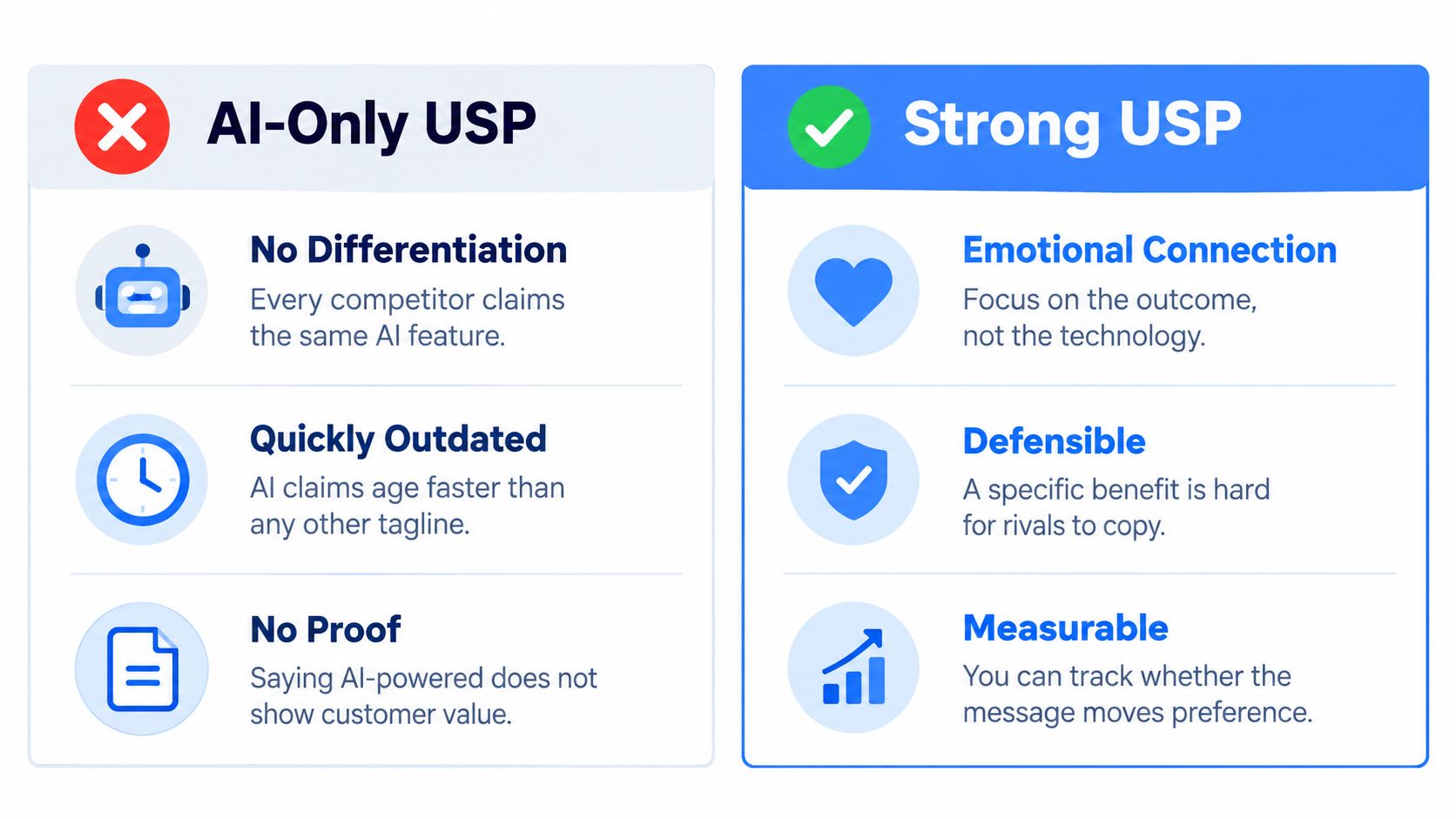
That doesn't make AI a problem to hide. It means the product should explain the human or business advantage it supports. A pattern based content tool, for example, can describe how it identifies structures in successful posts, adapts those structures to a creator's subject, and lets the creator revise the result in their own voice. That's a process a buyer can inspect. “AI writes posts” leaves the useful questions unanswered.
A defensible claim needs a human signature and visible proof. Use firsthand examples, review factual accuracy, and check that the finished content sounds like the person who will publish it. Be clear about AI involvement when transparency matters to your audience. Then measure whether the work helps attract relevant readers and start useful conversations, not only whether a draft appeared quickly.
Don't position the tool as original because it uses a new model. Position the work it helps people do, and show how human judgment keeps that work specific, accurate, and worth reading. The algorithm can draft a sentence. It can't provide a founder's lived experience.
Quick Answers Founders Keep Asking About USPs
How can I test a USP without paying for a survey?
Ask customers in sales calls, support conversations, or follow up emails. Use the same plain question: “What made you choose us?” Record their exact answers and look for themes. Then compare the theme with your current claim. If customers value something your headline ignores, fix the headline.
How do I know if my USP is too broad or too niche?
A broad claim could belong to almost any competitor. A too narrow one describes a feature that barely matters to the buyer. Name the customer, the problem, and the result. If buyers in that segment understand the claim and see its value, it's specific enough to test.
How should I test the message on LinkedIn?
Use a consistent core message while varying the example or format. Track profile visits, qualified replies, useful conversations, and clicks tied to your offer. Don't declare a winner because one post collected more likes. A 106 week B2B LinkedIn study found that new followers and website visits increased sales revenue, while its reported result doesn't justify treating likes alone as a business outcome. (B2B LinkedIn content study and benchmark context)
What if the current USP isn't converting?
Check the promise before you rewrite the prose. Ask whether the right buyer sees an important problem, whether the advantage is credible, and whether the next step is clear. If the claim is true but hard to prove, gather stronger evidence. If buyers don't care about the promised benefit, change the benefit.
Should I say that AI is involved?
Be straightforward when AI plays a meaningful role, especially if your audience expects that information. Don't make AI the whole pitch. Explain what the technology does, where a person reviews the work, and what outcome the buyer can assess.
ViralBrain helps founders and B2B teams turn proven LinkedIn post patterns into drafts suited to their topics and voice. Put your selling point to work with ViralBrain, then build a publishing habit around evidence, not guesswork.
Grow your LinkedIn to the next level.
Use ViralBrain to analyze top creators and create posts that perform.
Try ViralBrain free